

Government Fleet Fuel Security: Protect Taxpayer Assets
Government fleet vehicles are high-value targets for fuel theft. Municipal trucks, county vehicles, and state fleet equipment are often parked in open motor pools, public works yards, and agency lots — locations accessible to the public with minimal overnight security. Every stolen gallon is a taxpayer-funded loss that also shows up as an unexplained fuel variance in your next audit. This page covers why public fleets get targeted, which vehicles are most exposed, and how to buy and deploy locking fuel doors through normal government procurement.
Last updated November 2026 · Gas Protector, a brand of AMI Transportation, LLC, Sarasota, FL
Quick answer for fleet managers
A Gas Protector locking fuel door mounts over the exposed fuel cap on Ford F-350–F-600, E-350/E-450, F-53, and Ram 3500–5500 chassis. It is bolt-on with no drilling (8–15 minutes per vehicle), can be keyed alike across the whole fleet, starts at $159.95 per door with a lifetime warranty, and can be purchased by PO with Net-30 terms.
Why Government Fleets Need Fuel Door Security
Government fleets face unique challenges that make fuel theft prevention both critical and difficult:
Public Accountability
Every dollar of stolen fuel is taxpayer money. Fleet managers must demonstrate responsible stewardship of public assets.
Procurement Compliance
Solutions must meet government purchasing requirements — GSA schedule, purchase orders, competitive pricing documentation.
Audit Requirements
Fuel discrepancies trigger audit flags. Unexplained consumption spikes create paperwork burden and compliance risk.
Service Continuity
Empty fuel tanks mean delayed snow plowing, missed sanitation routes, and slower emergency response times.
When Fuel Theft Disrupts Public Services
Fuel theft doesn't just cost money — it directly impacts the services citizens depend on:
Snow plows, road crews, and maintenance vehicles can't deploy on schedule when tanks are empty.
Garbage collection routes are delayed or missed, causing health and sanitation complaints.
Grounds maintenance trucks sit idle while crews wait for emergency refueling.
Emergency repair trucks may arrive with insufficient fuel to power auxiliary equipment.
Inspection vehicles lose a full shift while waiting for fleet services to refuel.
Which Government Vehicles Are Most Exposed?
| Vehicle type | Common chassis | Why it is at risk |
|---|---|---|
| Dump & plow trucks | Ford F-450/F-550/F-600, Ram 4500/5500 | Parked in open public works yards between storms |
| Utility & service bodies | Ford F-350–F-550, Ram 3500–5500 | Left at job sites and lift stations overnight |
| Shuttle & paratransit buses | Ford E-350/E-450 cutaway | Large tanks, parked in unattended transit lots |
| Ambulances & rescue units | Ford E-450, F-450/F-550, Ram 4500/5500 | Must be fueled and ready at all times |
| Mobile command & library vehicles | Ford F-53 stripped chassis | Big tanks, parked for days at events and storage |
Gas Protector for Government Fleets
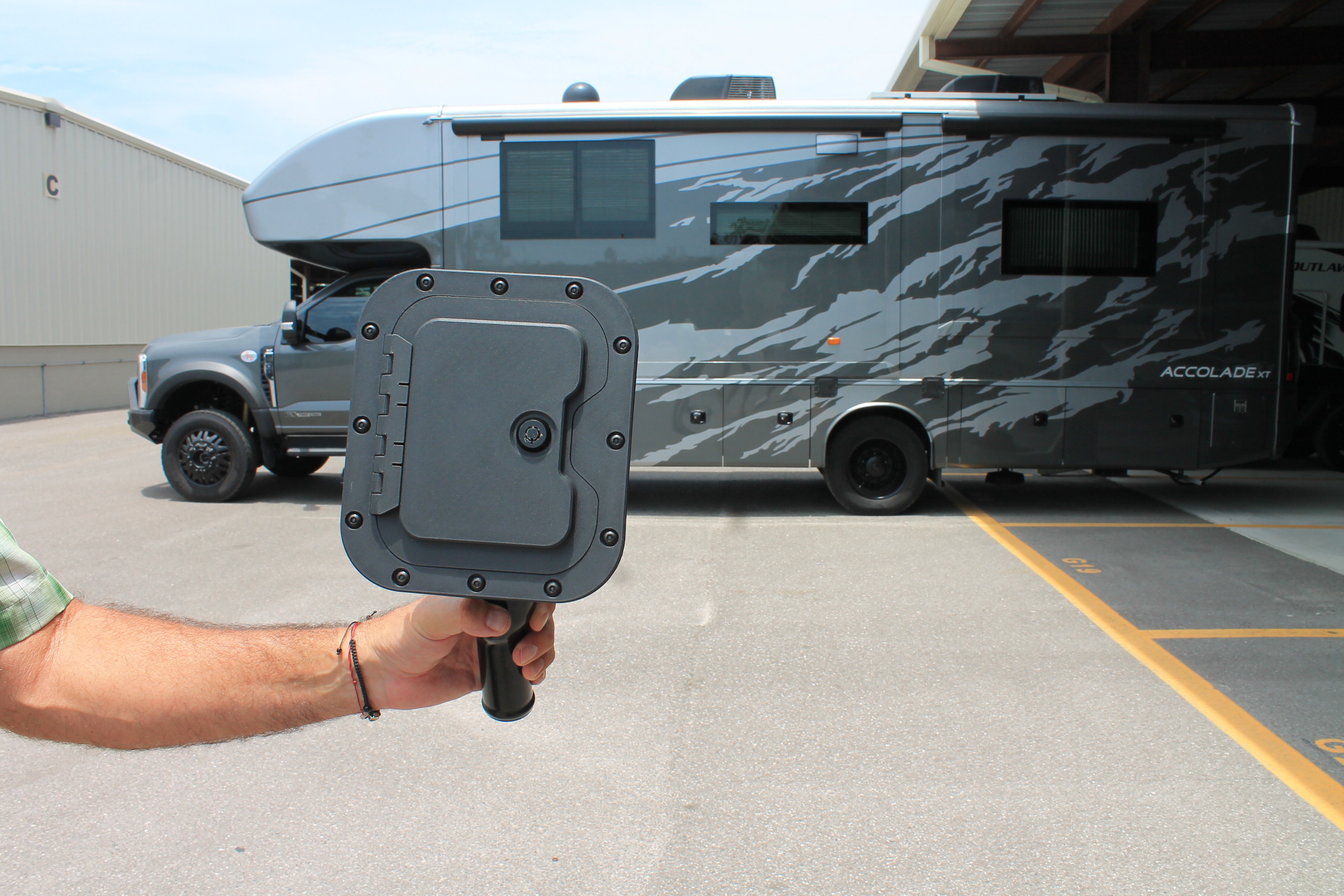
Gas Protector locking fuel doors are designed for the demands of government fleet operations:
High-strength, UV-stable composite with Torx security fasteners — built to resist prying and tampering
Mounts over the exposed fuel cap — no change to the factory fuel system
Bolt-on installation — no permanent vehicle modification, preserves warranty
Keyed-alike across your entire fleet — one master key for all vehicles
Purchase orders accepted — net-30 terms for government agencies
GSA-ready pricing and documentation available upon request
Lifetime warranty — budget once, protect forever
Compatible with Ford & Ram chassis cab, cutaway, and stripped chassis platforms

Government Procurement Made Simple
We understand government purchasing. Gas Protector accepts purchase orders, offers net-30 terms, and provides all necessary documentation for competitive bid requirements. Whether you're a small municipality outfitting 5 trucks or a state DOT securing 500 vehicles, we have a procurement path that works for your agency.
Fleet rollout checklist
- List each vehicle by make, model, year, and chassis (for example Ford F-550 chassis cab or Ford E-450 cutaway).
- Request a fleet quote with volume pricing and keyed-alike options.
- Issue a purchase order (Net-30 available for qualified agencies).
- Install during routine PM service. Each door bolts on in 8–15 minutes with no drilling.
- Log the key code and compare fuel use per vehicle before and after install.
Budget example (estimate)
A 20-truck public works fleet at the $159.95 single-door price is about $3,200 before any volume discount. If one 40-gallon tank is drained per truck per year at $4.50 per gallon, that is about $3,600 in lost fuel, before overtime and missed routes. Your numbers will vary; use your own fuel logs for a real ROI case.
Federal and military buyers: see military fuel security and The Military Fuel Vault at militaryfuelvault.com. Fire and EMS agencies: see first responder fuel security.